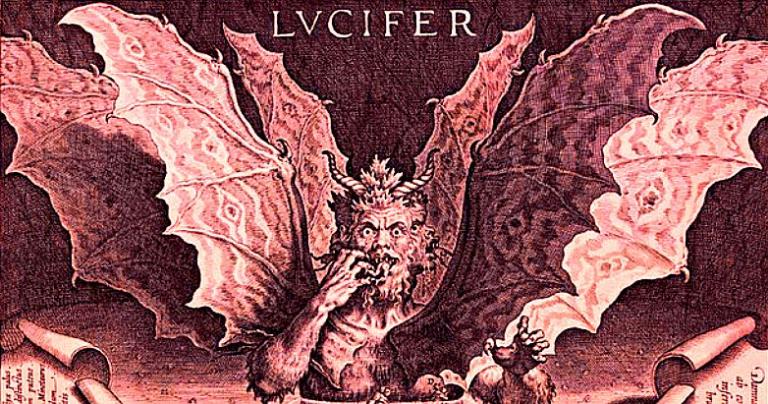
God as Donald Trump: Trying to Make Sense of Praise and Worship (part 5)

My thesis in this multi-part post (part 1 here) has been that praise and worship might be relevant to someone like Donald Trump who admires dictators, but it makes no sense for a wise and powerful god to want it.

Let’s continue with Christian apologists’ justifications for praise and worship of God (part 1 here).

7. Worship God because we need to fear him

Here’s an old-school approach to our relationship with God:

 If at any point in the process we lose respect, trust, appropriate fear, or love for God, we lose the ability to learn and grow as we ought, and then, like unruly children, we can do ourselves great damage. . . .

For this reason, it’s necessary to command people to worship God, just as it’s necessary for a parent at times to command their children to show respect. . . . God insists on worship, because He has to protect our ability to learn from Him. (Source)

Ah, the “You’re gonna worship me or else!” school of thought. I knew it would pop up somewhere. The source continues, and it gets a little spooky.

[After a disaster] is a dangerous time in which faith can be lost; and it might be lost, if there was not a standing command to honor God, and an already-existing relationship.

If your common sense is telling you that there is no god, given his no-show status at a disaster, listen to it. This nonsensical “just believe, regardless of the evidence” advice is the sound of a meme struggling to survive.

The conflict between grief and love for God produces tension; the tension eventually produces new growth, trust with a more mature understanding. The obligation to worship is the lynch-pin that keeps the believer tethered to his salvation when life makes little sense.

This apologist tips his hand. This “mature understanding” realizes that you can’t take the Bible at its word. When Jesus says, “Ask and you will receive,” it’s not like that’s supposed to actually work in the real world. Prayer doesn’t “work” in the same way a car or light switch works. You must have a “mature understanding,” you see. Prayer is good at self-soothing and supporting a confirmation bias, but “mature” Christians know it’s not like prayer works or God will look out for you or that you can rely on any of Christianity’s other supernatural claims.

8. Because it’s only fair

We’re supposed to praise God because it’s just the right thing to do. Here’s an example:

Imagine that you crafted an incredibly beautiful sculpture and won a prestigious award for your creation; but when the time came for the award ceremony, they gave the prize for your sculpture to the wrong artist! That would not be just, right, or good. (Source)

Human artists are burdened by concerns that never bother God. They need to make a living, and prizes can be an important way to build a reputation and raise the value of their art. Or, maybe they just have an ego, and they like hearing praise. God has no such concerns for money, and he should be above ego-driven needs.

Tibetan Buddhist monks might spend a week or more creating a sand mandala on a floor and then sweep it up afterwards. That’s how enlightened people approach praise for their work.

In the same way, God—as the only being perfect in goodness, justice, love, etc.—is worthy of our praise. We do, in fact, owe Him that praise. He wants us to praise Him because it is right and good for us to do so. Since God wants us to do right and good things, of course he wants us to praise and worship Him.

My responses to previous arguments apply to this one. This argument assumes that praise makes sense in the case of a maximally enlightened being, but that assumption must be backed up with an argument.

9. Because we’re under attack!

Circle the wagons, people! We’re under attack:

Praise makes the enemy flee. It pushes back the darkness [that] surrounds, and blocks the attacks and hissing lies over us. Evil will not stick around if we’re praising our God, who will fight our battles for us. (Source)

Praise is an effective weapon against the devil. . . . He has hated praise ever since because of its reminder of what he gave up and can’t regain. (Source)

Here’s a Chicken Little apologist with an active imagination who imagines a celestial D-Day:

Every place in history where God intervened in the affairs of men constitutes a beachhead where God’s dominion has been re-established in some measure. Around those beachheads . . . hover the unclean spirits as an occupying army, deceiving and destroying the souls who are their captives. (Source)

In the first place, Satan works for God. Read Job 1 to see that he does what God tells him to. (Yes, Satan killed people in this story, but it’s with God’s permission, and this was the limit of Satan’s killing in the Bible. God, by contrast, kills millions.)

The idea of a celestial battle probably came into Judaism after Cyrus the Great of Persia liberated the Jews from captivity in Babylon. Zoroastrianism was the religion of Persia, and it had the concept of two equally matched gods, one good and one bad, and a final battle with Good triumphing.

Christianity is left with an odd mixture. On one hand, Satan is roaming the world at will and capturing souls. But on the other, Revelation lays out the entire convoluted end game in which Satan will unquestionably be subdued and imprisoned.

Concluded in part 6.

The more I study religions
the more I am convinced
that man never worshipped
anything but himself.
— Sir Richard Burton

.

Image via pixabay, CC license
.

The Backfire Effect: When Accurate Information Is a Mistake

Barack Obama is a Christian. He easily passes the tests you’d give to anyone else: he uses Christian language, he goes to church, and (most importantly) he says he’s a Christian!

It’s been fact checked, as if that would be necessary. Turns out that, yes, he’s a Christian.

But you wouldn’t be so sure if you took your conclusion from polls. In March 2008, before Obama was elected president, polls showed 47% of Americans accepted that he was Christian, 12% said Muslim, and 36% didn’t know. With time, this groundless bias should dissolve away, right? Nope. Four years later, the 2012 poll showed similar results.

Another poll in Mississippi found 12% saying Christian and 52% Muslim (and 36% Don’t Know). Among “very conservative” voters, it was 3% Christian, 58% Muslim, and 39% Don’t Know. That was in 2012. In America, where Article VI of the Constitution forbids a religious test for public office and the technology is widely available to look stuff up.

This example shows that we well-educated moderns don’t always accept obvious facts. Who could then doubt that first-century Christians might not have recorded events with perfect accuracy? But that’s just a corollary observation. I want to instead explore how this deeply embraced misinformation gets in our heads and stays there.

Backfire effect

The natural response for skeptics like me is to suppose that misinformed people simply don’t have the correct facts. People are eager to know the truth, and if we provide them with the facts, the misinformation will vanish.

In some cases, this is true. A correction that doesn’t push any buttons can work. It’s easy to accept a more efficient driving route to work or a new accounting policy. In situations like politics, however—as the “Obama isn’t a Christian” example shows—things are more complicated. And here’s the crazy thing: presenting people with the correct information can reinforce the false beliefs. That’s the Backfire Effect.

One helpful article (“How facts backfire”) notes that it’s threatening to admit that you’re wrong, especially where one’s worldview is involved, as with politics and religion. The article calls the Backfire Effect a defense mechanism that avoids cognitive dissonance. Cognitive dissonance is “the mental discomfort (psychological stress) experienced by a person who simultaneously holds two or more contradictory beliefs, ideas, or values.”

In reality, we often base our opinions on our beliefs, which can have an uneasy relationship with facts. And rather than facts driving beliefs, our beliefs can dictate the facts we chose to accept. They can cause us to twist facts so they fit better with our preconceived notions.

It gets worse. I’ve written before about the critical but often overlooked difference between confidence and accuracy in memories, how a confident memory isn’t necessarily an accurate one. Studies of the Backfire Effect show that those people most confident in their grasp of the facts tended to be the least knowledgeable about the topic. That is, those most in need of correcting their beliefs are least likely to do so.

This isn’t just an academic issue. These people are voters, and their ignorance affects public policy.

(As an aside, this is related to the Dunning-Kruger effect in which more competent people rate their ability less than it actually is, while less competent people do the reverse. The hypothesis is that the less competent people were too incompetent to appreciate their own incompetence.)

How can we humans be as smart as we are but have this aversion to correct information? The human brain seems to seek consistency. It’s mentally easy to select confirming information and ignore the rest. Reevaluating core principles is difficult and stressful work.

Let’s not be too hard on ourselves, though. If we had to continually reevaluate everything, we’d never get out of bed in the morning. Cognitive shortcuts make sense, usually, but let’s keep in mind the limitations of our mental computer.

Silver lining

I do take some small delight in this, however. Political conservatives today grant themselves the privilege of picking and choosing their facts, rejecting Obama’s religion as well as evidence for climate change, evolution, and any other inconvenient fact. But then they undercut their own conservative Christian arguments when they insist that the authors of the New Testament were scrupulous journalists.

Nope—if conservative Christians care little for the truth today, they can’t insist that first-century scribes were any more careful.

Continue with a post discussing ways to bypass the Backfire Effect.

The door of a bigoted mind opens outwards
so that the only result of the pressure of facts upon it
is to close it more snugly.
— Ogden Nash

.

(This is an update of a post that originally appeared 12/8/14.)

Image via Liji Jinaraj, CC license

.

Responding to “10 Myths About God” (3 of 3)

Let’s conclude our critique of a Christian ministry’s video series of ten myths about God (part 1).

Myth 7: People are basically good. The Bible says that we have an inherent dignity and that there’s good within us, and we’re created in the image of God. But the guys reject the idea that we’re good at heart. No, it’s like humans are infected with a virus. Our hosts wallow in descriptions of our corruption, depravity, and rebellion against God and in the hopelessness of our condition. (Color coding explained in part 1).

I’ll agree that people suck sometimes. We may not be much, but we’re all we’ve got.

But we start looking pretty good when you consider what mankind has done that God didn’t. We’ve ended slavery as an acceptable institution in the modern world, we feed billions of people with industrial agriculture, and we’ve improved the health of the world through vaccines, antibiotics, clean water, and so on. Human society is far from perfect, but it’s a lot better than the Old Testament society that God was responsible for.

Myth 8: All paths lead to God. Remember the story of the blind men and the elephant? Each one felt a different part, and each came to a different and incomplete understanding. This myth says that Jesus is like the elephant, and different cultures just describe him differently. But no, the video dismisses this and tells us that the message of Jesus is an exclusive one. “No one comes to the father but by me” (John 14:6).

To the idea that the sacrifice of Jesus would be called just one path of many, one host called this a slap in the face of the father. I disagree. I don’t see the slap since the “sacrifice” wasn’t really that big a deal.

We’re told that the other options are wrong but are given no reason to accept the Christian path over the others. Or why any supernatural claims are correct.

Let me sketch out the obvious natural explanation: life is scary, and our fragile, imperfect minds have cobbled religions together to help explain the things that go bump in the night. The answers offered by Christianity were okay when it was the only game in town, but it’s not anymore. Humanity has grown up, we have far better explanations, and it’s time to leave childhood superstitions behind.

Myth 9: I go to church, so I’m a Christian. Just like being in a barn doesn’t make you a horse, being in a church doesn’t make you a Christian. Don’t be like the Pharisees, who focused on the godly appearance.

They say that the church is about fellowship and relationship. It’s easy to understand the community among people in church, but isn’t it ironic that God isn’t as obvious? What does that tell us?

Myth 10: Satan is the opposite of God. The myth is that God and Satan are like yin and yang—equal and opposite forces, and we can only hold our breath, hoping that God wins in the end. It’s like comic books where the superhero is equally matched to the villain, and we’re on the edge of our seats until the last scene.

The truth, according to the video, is that this is actually the most boring and mismatched matchup ever. God could, in an instant, wipe out Satan’s works and even his existence. Imagining Satan defeating God is like imagining any of us defeating God. But since Satan has read the Bible, he knows how it all ends. Why then imagine that he’s sticking around to put up with the charade?

Yet again, I wonder if the boys have actually, y’know, read the Bible. For example, it wasn’t Satan in the Garden of Eden, it was a talking serpent. To imagine it was actually Satan in disguise is simply to map Christian thinking into a far older non-Christian story. The book of Revelation vaguely makes this Satan/serpent argument, but it’s simply stated without justification.

We see Satan in one of the Bible’s oldest books. In Job 1:6–12, Satan is “the adversary,” like a prosecuting attorney. Here, “Satan” is a title, not a name. Far from being God’s sworn enemy, Satan is God’s handyman or assistant. Satan tests God’s people to make sure that they are as stalwart as they appear.

Only later in the Bible do we see Satan or the devil as a bad character:

[Jesus said,] “Away from me, Satan!” (Matthew 4:10).

Your enemy the devil prowls around like a roaring lion looking for someone to devour (1 Peter 5:8).

[The angel] seized the dragon, that ancient serpent, who is the devil, or Satan, and bound him for a thousand years (Revelation 20:2).

We can see the complex background from which our modern idea of Satan as a villain arose when we consider the many names and ideas that are often conflated: Satan, Lucifer, Leviathan, Belial, Beelzebub, the devil, the dragon, the serpent. That we do see Satan as evil in the New Testament only argues that the idea has evolved, something that happens in manmade literature, not in the unchanging plan of an omniscient creator.

Any being that wants to be worshipped
has shown itself to be unworthy of worship.
— commenter Without Malice

.

(This is an update of a post that originally appeared 12/3/14.)

Photo credit: WSJ

.

Responding to “10 Myths About God” (2 of 3)

Let’s continue critiquing a Christian ministry’s video series of ten myths about God (part 1).

Myth 4: Jesus is not God. Our hosts tell us that the most important question in the Bible was asked by Jesus: “Who do people say the Son of Man is?” Correct answer: Jesus is the god-man. There are nonbelievers who say Jesus was a great man and a wise teacher, but they get this big question wrong.

The evidence argues that Jesus was just a legend. The impact of the religion that grew up around his story has been huge, but that alone doesn’t contradict my position. As for Jesus being a great and wise teacher, I don’t find that in the Bible, but if you find some good stuff there, that’s great.

C. S. Lewis said, “Let us not come with any patronizing nonsense about his being a great human teacher. He has not left that open to us.” Bullshit. Thomas Jefferson took a razor to the Bible and created his famous Jefferson Bible, keeping only the wisdom of Jesus and dropping all miracles.

Just because it’s not history doesn’t mean it doesn’t contain wisdom (but I bet I’d find more keepers in The Prophet by Kahlil Gibran than in the Bible).

We’re also told in this video that “Jesus is presented [in the Bible] as the eternal God, the second person of the eternal Trinity.” Not really, and this brings us to the next myth.

Myth 5: The Trinity was invented. “What the Council of Nicaea said was that the Bible clearly teaches that there is a Trinity.”

The first problem is that, in the Trinity department, this council only rejected Arianism, which stated that Jesus was subordinate to and created by God the Father. The concept of the Trinity (with the Holy Spirit pulled into the partnership) wouldn’t be finalized until succeeding councils.

Now let’s respond to the claim that the Bible “clearly teaches that there is a Trinity.” It doesn’t. Arianism wasn’t popular just out of spite; the Bible supports it. For example, Jesus said, “The Father is greater than I” (John 14:28).

Imagine going back in time and asking Paul to explain the Trinity to you. He wouldn’t know what you were talking about, because the Trinity was a later invention. It wouldn’t have been familiar to the earliest Christians.

Could Jesus have known the truth of the Trinity but not bothered to make it clear in his teachings? Far more likely is that he (or the gospel authors who put words into his mouth) also had no notion of the concept.

What you do see in the New Testament is the divinity of Jesus evolving with time. Sort the books chronologically and see the evolution. In Romans, Jesus was “appointed the Son of God” at his resurrection. In Mark, Jesus becomes divine earlier, at his baptism. In Matthew and Luke, it’s at his birth. And in John, since forever. In a similar way, the idea of the Trinity evolved through the writings of the early church fathers until it was codified in pieces in the fourth century.

I write more about the Trinity here and here.

Myth 6: Good works get us to heaven. That’s true for many religions, but not Christianity. Paul said, “For it is by grace you have been saved, through faith—and this is not from yourselves, it is the gift of God—not by works, so that no one can boast” (Ephesians 2:8–9).

Yes, the Bible does make clear that faith alone gets you into heaven—except for all the places where it argues the opposite. The Bible also says that repentance wipes away sins (Acts 3:19). And that water baptism is necessary for new life (Romans 6:4–5). And that works are at least necessary if not the sole route to heaven.

  • James 2:8–26 acknowledges faith but puts the focus squarely on works, including keeping the Law. For example, it nicely skewers faith here: “Show me your faith without deeds, and I will show you my faith by my deeds.” (James 2:18–19).
  • In heaven, the dead are judged “according to their works” (Revelation 20:12).
  • Jesus explains “Love your neighbor as yourself” with the Parable of the Good Samaritan and makes clear that good works like these get one “eternal life” (Luke 10:25–37).
  • The Parable of the Sheep and the Goats makes plain that those who make it to the Kingdom do so through their good works. Faith isn’t even mentioned (Matthew 25:31–46).

Our hosts tell us, “You and I can’t do enough good works to get to heaven.” Can they not have read these and other verses that point to the role of good works?

Next, “We’re born with a negative bank account . . . and there’s no way you can work yourself out of this debt we have to God.” This reminds me of the refrain, “I owe my soul to the company store” from the song “Sixteen Tons,” which made clear the debt slavery forced on Kentucky coal miners during the Depression. God owns you just like the mine owned its workers? Not a pleasant image.

And what did we do to deserve getting born with this debt? Apparently, our hosts are also unfamiliar with this verse: “Fathers shall not be put to death for their children, nor children put to death for their fathers; each is to die for his own sin” (Deuteronomy 24:16).

Concluded in part 3.

You either have a god who sends child rapists to rape children
or you have a God who simply watches and says,
“When you’re done, I’m going to punish you.”
If I could stop a person from raping a child, I would.
That’s the difference between me and your god.
— Tracie Harris, “The Atheist Experience”

.

(This is an update of a post that originally appeared 11/26/14.)

Image via David, CC license

.

8 Reasons to Reject C. S. Lewis’s Argument from Desire

The Argument from Desire looks at innate desires and sees the shadow of God. We feel hunger, so therefore there must be food. We thirst and therefore there’s water; we yearn for companionship and therefore there are companions; we yearn for god . . . and therefore there is a god.

C. S. Lewis said,

Creatures are not born with desires unless satisfaction for those desires exists. . . . If I discover within myself a desire which no experience in this world can satisfy, the most probable explanation is that I was made for another world.

Lewis was popularizing a concept that theologians have expressed for centuries. John Calvin referred to the sensus divinitatisa sense, not of the environment like sight or smell, but of God. Blaise Pascal proposed a “God-shaped vacuum in the heart of every man.”

This apologetic is easy to understand and has an intuitive appeal, but it fails under closer inspection.

1. Why do we fear death? If our inclinations are a reliable instinctual pointer to the supernatural, then why the fear of death? If we instinctively know that there is a god and an eternal place for our soul to live after life on earth, humans should differ from other animals in having an ambivalence about death or even a longing for it. We don’t.

2. The puddle problem. Lewis imagined that hunger points to the existence of food, but it’s the other way around. Consider Douglas Adams’ puddle, which marveled at how well-crafted its hole was: “Fits me rather neatly, doesn’t it? In fact it fits me staggeringly well; must have been made to have me in it!”

Lewis’s error is the same as the puddle’s backwards thinking. We don’t notice hunger and then conclude that food must exist; rather, creatures need food to survive, and evolution selects those that have a hunger to successfully get it.

3. Desire for God isn’t an innate desire. If the desires for food, water, sex and other basics are never fulfilled, the human race dies out. The “hunger” for the supernatural has nothing to do with survival. Lewis doesn’t show that this very different desire for God logically fits in with the fundamental desires necessary for life.

4. This is just a deist argument. If you find this argument compelling, this should point you to deism. Like many other arguments, this one only claims that there is some anonymous clock maker behind the universe. There is nothing here to argue for the Christian god over any other god or supernatural pantheon. (More here.)

If you argue that this god desire actually does point you to the Christian god, you must explain the myriad ways God belief plays out in practice. And why would the Christian god give you a vague sense of some sort of celestial clockmaker instead of pointing our desire specifically to him? What we see instead is that the specifics of god belief are just a local custom. (More here and here.)

5. Consider what else comes along with the argument. C. S. Lewis said, “It would be very odd if the phenomenon called ‘falling in love’ occurred in a sexless world.”

And would it also be odd if the phenomenon “belief in magic” occurred in a magic-less world? It’s not odd at all, because that’s the world we’re living in. Belief in magic is still widespread and was even more so a few centuries ago. We in the West shouldn’t be too smug that we’ve largely turned our backs on magic, because our thinking is still influenced by superstitions and evidence-less beliefs in things like coincidences, fate, and homeopathy.

We don’t need to puzzle over falling in love, because we know that love and sex exist in our world. But, despite Lewis’s efforts, the God belief looks like just another human belief poorly grounded in evidence.

6. The Ontological Argument again? You can imagine perfect justice, world peace, or a loving god, but that doesn’t make them reality. As with the Ontological Argument, thinking of it doesn’t make it so.

7. What is “innate”? Proponents of this argument list fundamental innate physical needs and drives like food, drink, sex, safety, and sleep. They may also throw in higher-level desires for beauty, justice, knowledge, friendship, love, and companionship.

The skeptic can retort with demands for Aladdin’s lamp, Shangri-La, or superpowers. Because they’d be great to have, does that mean that they exist? To avoid this, the apologist may distinguish between innate desires (the first sort—things that actually exist) and contrived desires (the second).

Let’s work with that distinction. In several ways, God desire does not appear to be innate.

7a. The category of innate desires is those things for which there is a clear target of the desire. No one doubts that food and drink exist, but there’s plenty of doubt about superpowers. (Guess which bin God desire fits into.)

7b. Everyone must satisfy the needs of hunger and thirst. Not everyone finds satisfaction for a God desire, and not everyone even has such a desire. The apologist may respond that that might also apply to the higher-level desires such as beauty and justice, but this only makes the innate category seem more arbitrary.

7c. Another way of seeing the innate/contrived distinction is that the innate desires (for food, sex, and companionship, for example) are those we share with other social animals. Since no animal desires God, why call that desire innate?

8. Don’t let your desires run away with you. We must be skeptical of fluffy arguments guided by desires.

Even C. S. Lewis himself argues against trusting too much in desire and Joy because the sane, rational person must be very suspicious of where moods and emotions might lead: “Unless you teach your moods where they get off, you can never be either a sound Christian or even a sound atheist, but just a creature dithering to and fro, with its beliefs really dependent on the weather and the state of its digestion.” The C. S. Lewis of this passage would insist that we regard our inner states, including desires and Joy, with suspicion if not discount them entirely. (Source: About.com)

Searching for the best spin on this argument

If the list of innate desires were 10,000 long, the apologists’ argument would have some weight. They’d say, “Every single item on this enormous list is a desire for which we know that a corresponding target exists! The only question left is our yearning for god. How likely is it that this one thing is a counterexample?”

But even with the cerebral desires (justice, love, etc.), the list of innate desires is maybe a dozen items long. At its foundation, this is a weak argument. And given the problems highlighted above, the argument no longer has credibility.

God belief is a poor fit as an innate belief, but here’s a better comparison. Wishful thinking in religion is like wishful thinking in the health and beauty aisle, or in diets, or in end-of-life care. What’s the loss of a little money when you could look better, be thinner, or live longer? Hope springs eternal, in religion as in more mundane areas. It’d be great to look younger or more fit, and it’d be great to have an all-powerful Friend looking out for me. That doesn’t make it true.

As with claims for cosmetics and cure-alls, we must be skeptical.

In the factory we make cosmetics;
in the drugstore we sell hope.
— Charles Revson (founder of Revlon)

.

This is an update of a post that originally appeared 11/19/14.)

Image via Dawn, CC license

.

Fallible Memories and the Development of Legend

A few years ago, a writer colleague told me an amazing personal story about the fallibility of memory. He was in high school some 40 years earlier, and one day the creek behind his school flooded after heavy rain. He and some classmates jumped in and rode the river downstream.

Unfortunately, a hidden branch caught his collar and pulled him under the rushing water, and he wasn’t able to disentangle himself. It might have been a sad day for our hero but for a nearby girl who was able to yank him free.

Decades later, an anthology of stories from those days was put together and the female classmate wrote the story of the impromptu trip down the river and the fortunate rescue, but in her version, he saved her!

There’s a big difference between a vivid memory and an accurate one. This fact is too often forgotten when apologists argue that the gospel story made it intact through 40 years of oral history. If you saw a man raised from the dead, they say, wouldn’t you remember that with crystal clarify?

You might indeed have a vivid or even a confident memory of something, but we can’t be sure it was accurate. Let’s look at other examples of overconfident but imperfect memories.

Example 2: Challenger memory experiment (1992)

The day after the Challenger space shuttle exploded in 1986, a professor ask 106 freshmen students to fill out a questionnaire with details of their perception of the event—where they were, what they were doing, when it happened, and so on. Two and a half years later, he re-surveyed many of those students with the same questionnaire, also asking how confident they were with each of their answers.

Taking the original set of answers as correct, the accuracy of the answers scored 42%, but the students’ average confidence in the accuracy was 83%. Here again, these vivid memories weren’t especially accurate.

(I certainly remember what I was doing when I heard the news of the explosion. Well, at least I think I do. . . .)

Once the questionnaires were answered, the professor showed the students their original answers, but many stuck with their current answers. One student even declared, “That’s my handwriting, but that’s not what happened.”

This challenges the popular flashbulb memory model that “high emotional arousal, in conjunction with surprise, stress, and significance, will produce a vivid, accurate memory of the moment someone learns of an event.”

Example 3: What Jennifer saw

Jennifer Thompson was raped one July night in 1984. She took careful mental notes of the characteristics of her attacker and felt confident when she picked Ronald Cotton out of a lineup. On little more than her testimony, Cotton was convicted.

After more than ten years in prison, DNA evidence cleared Cotton. Thompson had been wrong. Eyewitness testimony is simply not especially reliable.

Thompson and Cotton have reconciled, have written a book together about forgiveness and the unreliability of memory, and have made presentations together.

(I’ve also written about the search for Miss Ames and what it reveals about confident memories here.)

Other examples

People’s stories are unreliable for lots of reasons including poor memory and self-delusion.

  • Hundreds of “heroes” who claim to have won the Medal of Honor actually haven’t, and a Library of Congress project to document veterans’ personal war stories is full of errors, including false military rank and false claims of being a prisoner of war.
  • During the 1980 presidential campaign, Ronald Reagan repeatedly told a story about a heroic World War II bomber pilot that actually came from the 1944 film, “A Wing and a Prayer,” and Hillary Clinton’s account of a frightening 1996 landing in Bosnia under enemy fire (when First Lady) wasn’t the way others remembered it.
  • You’d think that records and memories of U.S. nuclear weapons tests in the Pacific in the 1940s and 50s would be trustworthy, but a project to document this history has run into biased accounts and incorrect memories.
  • Osama bin Laden was killed in 2011, but there are already competing accounts about how it happened.
  • The problem of unreliable memories used as courtroom evidence has prompted a reevaluation of how they should best be used.

We’re all familiar with these kinds of problems. We all likely remember times when our own vivid memories have crashed into embarrassing and incontrovertible facts. Researchers have identified many specific memory errors including source confusion (the problem in the floating-down-the-river story above or with Reagan’s confusion about the film), suggestibility (accepting others’ erroneous versions), bias (changing the past to make it more like today or to heighten the differences), transience (forgetting over time), false memories (false histories implanted as memories), and more.

You can write a gospel, too!

Commenter Richard S. Russell proposed a challenge to simulate the difficulty of being the author of a gospel 40 years after the Resurrection. Think about an important event from our society 40 years ago that would be easy to fact check—say the U.S. presidential election of 1972. Who were the candidates, and who won the party nominations? What were the major issues, what were the party platforms, and what was each candidate’s position? What major gaffes or successes did each side have? What current events affected the election? Feel free to consult your friends but use memories only and no media or written sources.

Take your time and write it all down in order. Now compare it to what really happened. How well did you do?

This thought experiment only begins to highlight the difficulty because even though you didn’t consult authoritative sources such as news stories or encyclopedia articles, we brush up against those sources continually. We hear dozens of incidental clues each year about Johnson or Nixon or Vietnam, and these help keep our memories from straying. Gospel authors would’ve had no such help.

Christians like to claim that the gospels are eyewitness testimony, but what use is that claim? In the first place, there are few clues that the gospels were written by eyewitnesses (more here and here), and in the second, eyewitness testimony is unreliable. The argument for historical reliability of the New Testament is built on sand.

If you’re a black Christian,
you have a real short memory.
— Chris Rock

.

(This is an update of a post that originally appeared 11/12/14.)

Image via Kurtis Garbutt, CC license

.