
Word of the Day: Public Square

Remember John F. Kennedy’s famous speech assuring the public that his Catholicism would not affect his decisions as president? While Rick Santorum was still a candidate for president, he said about Kennedy’s speech:

Earlier in my political career, I had the opportunity to read the [Kennedy] speech, and I almost threw up. You should read the speech.

Hold on to your lunch, because we’re going to do just that. Here’s the central theme in what JFK said to the Greater Houston Ministerial Association in 1960:

I believe in an America where the separation of church and state is absolute—where no Catholic prelate would tell the President (should he be Catholic) how to act, and no Protestant minister would tell his parishioners for whom to vote—where no church or church school is granted any public funds or political preference—and where no man is denied public office merely because his religion differs from the President who might appoint him or the people who might elect him.

Santorum, who, like JFK, is Catholic, critiques this thinking as follows:

Kennedy for the first time articulated the vision saying, “No, faith is not allowed in the public square. I will keep it separate.” Go on and read the speech.

When asked about the throwing up bit, he elaborated:

To say that people of faith have no role in the public square? You bet that makes you throw up. What kind of country do we live that says only people of non-faith can come into the public square and make their case? That makes me throw up.

Huh? The guy is a lawyer, a two-time U.S. Representative, and a two-time U.S. Senator. Does he really not get it? I suppose the most charitable assumption is that he’s just playing to his electorate.
There are two meanings to “public square,” and Santorum confuses (or deliberately conflates) them here. The First Amendment establishes our free speech rights and, with some exceptions, we can say whatever we want in the literal public square. Hand out religious leaflets on a street corner. Stand on a soap box and preach like they do in Hyde Park. Wear a sign proclaiming the end of the world. Everyone agrees that the right that allows people of faith to speak in the public square is important. It is not under attack, and atheists defend Christians’ right to speak as strongly as Christians do.
The other public square is the government-supported public square—schools, courthouses, government buildings. The rules are different here. The First Amendment constrains government when it says, in part, “Congress [that is: government] shall make no law respecting an establishment of religion.”
Government must stay out of religion. No prayers or religiously motivated science in public schools. No Moses holding the Ten Commandments glaring down at you in a courtroom (as a collection of historic lawmakers, this is okay). No “In God We Trust” as a motto behind the city council (yeah, I know that we have that, but it’s still unconstitutional).
And isn’t this best for the Christian as well? No Wiccan or Satanist prayers in public schools. No Hindu god of jurisprudence glaring down from the courtroom wall. No “Allahu Akbar” in Arabic script behind the city council.
Keeping government out of the public square helps the Christian as much as it does the atheist.
Photo credit: Wikipedia
Related posts:

Related links:

Word of the Day: Genetic and Ad Hominem Fallacies

Christian apologetics in the big bookThe Heartland Institute recently put up a series of billboards featuring Ted Kaczynski (the Unabomber), Charles Manson (a cult leader), and Fidel Castro (a dictator). The text read: “I still believe in Global Warming. Do you?”
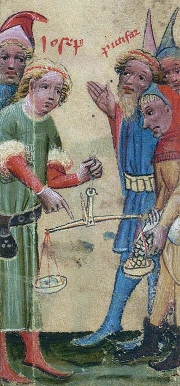
These are examples of the genetic fallacy. We’re asked, “How plausible can the claim of global warming be if these nutjobs accept it?” A genetic fallacy ignores any actual evidence or argument and looks instead at the origin (think genesis) of the argument. It’s a fallacy because it offers no relevant argument.
Another example would be, “You’re a vegetarian? Don’t you know that Hitler was a vegetarian?”
But consider this: “You can’t tell me that those new phosphorescent zucchinis are safe! Don’t you know that the research that supports that claim was funded exclusively by MegaCorp, the company that patented that vegetable?”
This claim is more compelling. Though it is genetic, it does more than make a simple origins claim. Compare that with “Don’t tell me that phosphorescent zucchinis are safe! MegaCorp says they’re safe.” Stripped of the evidence, it becomes an example of a genetic fallacy. (Of course, the evidence provided by MegaCorp could be weak or invented, but with it the claim at least avoids the genetic fallacy.)
Now consider these claims: “Christianity was influenced by myths of dying-and-rising saviors; therefore, the resurrection of Jesus must also be a myth.” Or, “The Noah flood story came from a society influenced by neighboring flood stories like that of Gilgamesh; therefore, the Noah flood story is a myth.”
These are (1) genetic, since they make conclusions based on origins, (2) unsubstantiated, since these claims will need lots of supporting evidence, and (3) fallacies. I would argue that these aren’t genetic fallacies, however. They fail in my mind because the unequivocal conclusion (“… must also be a myth”) can’t be built on evidence that simply points in that direction.
The fallacy vanishes when we make a conclusion that could follow from the evidence: “Christianity was influenced by myths of dying-and-rising saviors; therefore, we must consider that the resurrection of Jesus may also be a myth.” We still have work to do to establish that Christianity was influenced as claimed, but the fallacy is gone.
The genetic fallacy is the term for any argument that points solely to origin as its evidence, but there are many subsets based on the specific origin.

  • Ad hominem: attacking the person rather than the argument. “Senator Jones wants to raise taxes, but he beats his dog; therefore, raising taxes is a bad idea.”
  • Tu quoque: saying, in effect, “Oh yeah? Well you do, too!” This argument tries to respond to a problem by claiming that the other person suffers from it also.
  • Argument from authority fallacy: using an authority as a relevant source when that person is not an authority in the field at hand, rejects the consensus view (if any), or is biased.
  • Credential fallacy: rejecting an authority because that person doesn’t have the right degrees.
  • Ad feminam: rejecting an authority because that person is a woman.

And so on.
Avoid making thoughtless charges of these fallacies. Not every attack on a person is an ad hominem fallacy. “Just ignore that fire alarm; that’s nutty Mrs. Smith” may be a fallacy, but “Ignore that fire alarm; that’s Mrs. Smith, and she’s phoned in a false alarm about every week for over three years” isn’t. (It may not be the safest response for the fire department, but it’s not a logical fallacy.)
And as seen above, not every genetic (origins) argument is a fallacy.
Photo credit: Simon Varwell
Related posts:

Related links:

Pastors Speak Their Mind (and Flout the Rules)

Jesus, God, and all thatIt’s another dreaded election year, and the leaders of many religious organizations somehow feel put upon by the IRS because they can’t preach about politics.
But why? No one forced tax-exempt donations on them—in fact, they took them willingly—so it’s surprising that they’re now chafing at the regulations that come along for the ride. The solution is easy: if nonprofit status is a deal with the devil, then don’t accept nonprofit status.
The Internal Revenue Service makes clear that churches and pastors may organize non-partisan voter education activities, voter registration, and get-out-the-vote drives (with an emphasis on non-partisan). Religious leaders speaking for themselves can say whatever they want, and they can speak “about important issues of public policy.”
However, all nonprofit organizations, including religious organizations

are absolutely prohibited from directly or indirectly participating in, or intervening in, any political campaign on behalf of (or in opposition to) any candidate for elective public office. Contributions to political campaign funds or public statements of position (verbal or written) made by or on behalf of the organization in favor of or in opposition to any candidate for public office clearly violate the prohibition against political campaign activity. … Religious leaders cannot make partisan comments in official organization publications or at official church functions. …
[Nonprofits] must avoid any issue advocacy that functions as political campaign intervention. Even if a statement does not expressly tell an audience to vote for or against a specific candidate, an organization delivering the statement is at risk of violating the political campaign intervention prohibition if there is any message favoring or opposing a candidate.

But many pastors can’t accept this. I don’t know if they honestly think that it’s unfair or if they figure that they’ve already tipped the playing field so much in their favor that they’ll try their luck for even more, but the Alliance Defense Fund has organized the annual Pulpit Freedom Sunday (October 7 this year). On this day:

The pastors will exercise their First Amendment right to preach on the subject [of the moral qualifications of candidates seeking public office], despite federal tax regulations that prohibit intervening or participating in a political campaign. …
The point of the Pulpit Initiative is very simple: the IRS should not be the one making the decision by threatening to revoke a church’s tax-exempt status. We need to get the government out of the pulpit.

Wow—strange thinking. Tax-exempt status is granted by the government. It’s a contract, not a right, and it comes with strings attached. If we the public will be subsidizing an organization, we are entitled to limit its actions. No one’s strong-arming the church, and they can drop both the nonprofit status and the strings attached any time they want.
To some extent, it’s a zero-sum game. (For example, when Mormon desires for polygamy clashed with the needs of the state, someone had to lose.) The head of the IRS addressed this conflict of tax-exempt status and freedom of speech:

Freedom of speech and religious liberty are essential elements of our democracy. But the Supreme Court has in essence held that tax exemption is a privilege, not a right, stating, “Congress has not violated [an organization’s] First Amendment rights by declining to subsidize its First Amendment activities.”

If the IRS constraints against speaking out on political issues are a problem, then don’t enter into a contract with the IRS. Drop your nonprofit status, tell church members that they can no longer deduct donations, and then you can give your opinion about any candidate or issue.
But to keep your nonprofit status, you must follow the rules.
See the first post in this series: What do Churches Have to Hide?
Photo credit: Wikimedia
Related links:

Women at the Tomb? Weak Evidence for the Resurrection.

The women at the empty tomb isn't much evidence that Jesus was divineLet’s consider an incident from that first supposed Easter. All four gospels say that women were the first to discover the empty tomb. (Of course, who was actually at the tomb varies by the gospels, as do many other important details about the resurrection, which makes the gospels unreliable as history. But let’s ignore that for now.)
Many apologists point to the women as an important fact arguing that the gospels are reliable. Greg Koukl says:

Women, disrespected in the ancient world, are the first to witness the risen Christ. Why include these unflattering details if the Gospels are works of fiction?

I don’t know who argues that the gospels are fiction. I don’t think they’re history, but I certainly don’t think that they were deliberately invented. But let’s set that aside as well.
William Lane Craig says:

The discovery of the tomb by women is highly probable. Given the low status of women in Jewish society and their lack of qualification to serve as legal witnesses, the most plausible explanation … why women and not the male disciples were made discoverers of the empty tomb is that the women were in fact the ones who made this discovery.

That is, having women make this momentous discovery is embarrassing.
This is an application of the Criterion of Embarrassment, which argues that you’re likelier to delete something embarrassing than add it to your story. And if a story element is embarrassing, that points to its being historical fact.
But what’s embarrassing? Things that look embarrassing to us may not have been so to the author. For example, all four gospels show Peter denying Jesus three times. That’s pretty embarrassing … or is it?
Paul’s relaxed approach in converting Gentiles conflicted with the more traditional approach of Peter and James (the conflict is shown in Galatians 2:11–21, where Peter is called “Cephas”). Maybe supporters of Paul built their case by circulating a story in which Peter looks foolish, and this story became part of the canon.
So our question becomes: is it embarrassing to have women discover the empty tomb? These apologists certainly think so, and historical records agree on women’s unreliability. Josephus, a first-century historian, stated, “Let not the testimony of women be admitted because of the levity and boldness of their sex,” and the Mishnah (a Jewish legal text written in 220 CE) concurs.
However, this flimsy argument is much more popular than it deserves to be. I’ll respond in several ways.
Give the original authors credit for being good storytellers. As plot twists go, having women make the discovery instead of men isn’t particularly shocking. But if you find it a powerful argument for the truth of the story, then you can imagine why that element might have become attached to the story.
The gospel story wasn’t made up. The point that women were unreliable witnesses is relevant only in rebutting the charge that the story was deliberately invented, a claim I don’t make. I’ve never heard this hypothesis except by apologists. Instead, what best fits the facts for me is that the story documented in the gospels (in incompatible versions, but that’s another story) is the result of forty or more years of oral history. Each gospel is a snapshot of the tradition of a different church community in widely different places (perhaps Alexandria, Damascus, or Rome?) and over decades of time.
Believers might demand, “Well, how do you explain the empty tomb?” But of course, that assumes the accuracy of the gospel story to that point. It’s like saying, “How do you explain Jack’s cutting down the beanstalk any other way than that there really was a giant climbing down after him?”
Who cares about women’s “unreliability”? Women discover the empty tomb, they tell men, the men verify the story, and then the men spread the word. If you don’t like women as witnesses, you’ve got the men.
That women were less reliable as witnesses in court doesn’t matter because there is no court in the story! The women were trustworthy where it mattered—in conveying the story to people who knew and trusted them.
Tending to the dead was women’s work in this culture. Instead of women discovering that Jesus had risen, imagine this incident:

On the first day of the week, at early dawn, Simon Peter and James entered the kitchen to prepare bread for the community. In the darkness of the kitchen, a voice called out to them saying, “Why do you tend to minor matters when there is the LORD’s work to be done?” And they took hold of His feet and worshiped Him.

What’s wrong with this story? It’s that preparing bread is women’s work in this culture. It makes no sense to have men come across Jesus in the kitchen. And the same is true for men dealing with the dead. According to the Women in the Bible web site:

It was the women’s task to prepare a dead body for burial. … Tombs were visited and watched for three days by family members. On the third day after death, the body was examined. … On these occasions, the body would be treated by the women of the family with oils and perfumes. The women’s visit to the tombs of Jesus and Lazarus are connected with this ritual.

The Bible also gives clues to women’s role in mourning in Jer. 9:17–20 and 2 Sam. 14:2.
Mark focuses on reversals, and the other gospels followed Mark’s lead. Richard Carrier gives a detailed discussion of this topic and argues that a the-last-shall-be-first philosophy led Mark to add this touch.

Given Mark’s narrative agenda, regardless of the actual facts, the tomb has to be empty, in order to confound the expectations of the reader, just as a foreign Simon must carry the cross instead of Peter, a Gentile must acknowledge Christ’s divinity instead of the Jews, a Sanhedrist must bury the body, and women must be the first to hear the Good News.

He continues with a fascinating hypothesis about the relevance of the names of the three women that Mark places at the empty tomb. You can read the argument and decide for yourself if it’s well founded.
Seeing the gospel story as no more supernatural than any other myth from the past best explains the facts.
Photo credit
Related links:

Word of the Day: Confirmation Bias

Christianity and atheism, does God exist?Sandy beaches often have a line of debris left by the last high tide. These lines look different on different beaches, reflections of the local environment. They might contain rocks, shells, seaweed, jellyfish, flotsam or garbage, egg cases from skate or conch, and so on.
When I was about 11, I spent a week at a beach on which amber occasionally washed up. After a little training, I got pretty good at seeing the amber. On a different beach, the prize was fossilized shark’s teeth, and again I got good at spotting them amid the pebbles.
Given a little training and motivation, the mind pulls out interesting things from the background chaos. What is the wheat and what is the chaff changes based on your needs.
Suppose you’re an emergency room nurse and comment on what a crazy night it’s been and a coworker says, “That’s always the way it is with a full moon.” Now that your mind has been primed, you may notice this coincidence often. But seeing this as more than just a coincidence without good evidence is confirmation bias. Confirmation bias becomes a problem when you sift through the evidence that you come across and select only those bits that confirm what you already believe. You don’t seek information but confirmation.
The hypothesis “God answers prayers” can also be supported by confirmation bias—those prayers that more or less come true within some broad time range are counted as successes, and those that don’t are either ignored or repositioned with, “Sometimes, God says no.” Psychics and horoscope watchers will similarly list successful predictions and ignore or forget the failures.
I listened to the weekly Reasons to Believe podcast from Creationist Hugh Ross for a while. It was little more than a selection of the few bits of evidence from the thousands of scientific articles that week that could be interpreted to support his old-earth Creationist views. Seeing this for what it is—an answer to the question, “What in this week’s news would support my Creationist preconceptions?”—would be fine. It’s when we imagine that this is objective science that we delude ourselves.
So that we evolution-accepting atheists don’t get too smug, Sam Harris proposed the Fireplace Delusion, a chance to have our own preconceptions challenged. It’s a good exercise by which to see your mind being offended and the defenses it puts up to maintain its initial position.
The mind is built to favor evidence that confirms an existing opinion over disconfirming evidence, and to combat this bias, science tries to disconfirm theories rather than confirm them. You can’t prove a scientific theory right, but you can prove it wrong. This reversal—testing our opinions with disconfirming challenges rather than selecting confirming evidence—is a good example to follow.
We can prime our mind, like we’re looking for shark’s teeth on the beach, to pull in only what we want to see, but we delude ourselves when we do so.
Photo credit: Wikimedia
Related posts:

Related links:

Homosexuality v. Christianity

An atheist critique of the Christian response to homosexuality2012 is the centennial year of the birth of Alan Turing, a British cryptanalyst central to the project that decoded German Enigma messages during World War II and a pioneer in computer science. Celebrations marking the event are planned, and the UK has issued an Alan Turing stamp.
Though you may not have heard of Turing, you have been touched by his work. When a web form challenges you to read distorted text to make sure you’re not a computer program, you’re participating in a variant of the Turing Test. When you use a modern PC, you’re using a Turing Machine.
Turing was convicted under an 1885 law against homosexuality and forced to undergo “chemical castration” by hormone treatments. Details of his death are imprecise, but, despondent over the treatments, he apparently killed himself by cyanide poisoning.
This brilliant gay man was 41.
Gay suicides continue in our own day. A 14-year-old boy killed himself last September in response to school bullying, just months after recording an “It Gets Better” video.
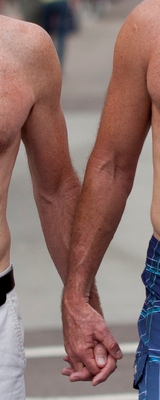
For those who wish for a day when sexual preference is as bothersome as hair color, things are improving. Within the last month, Washington and Maryland enacted laws allowing same-sex marriage (though both laws will likely be challenged by referendums in November), bringing to eight the number of states with such laws. The military’s Don’t Ask, Don’t Tell policy was repealed last fall. A Pew Research poll shows that supporters of same-sex marriage in the U.S. have recently become greater in number than those who oppose it. Archie Comics has even become gay friendly.
Can someone explain to me why same-sex marriage is an issue? I don’t get it, and I’ve drunk the marriage Kool-Aid. My wife and I have been married for over 30 years. I got married the same week I graduated from college. Two kids, no divorce, no adultery. When a preacher or politician imagines himself speaking to the country on this issue, he puts me in the front row. And I’m still waiting to hear a coherent argument for why same-sex marriage should bother me.
One of the most popular arguments is that this would redefine marriage. Okay, but so what? The definition of marriage hasn’t been a constant in the U.S. Until Loving v. Virginia in 1967, marriage in 17 states meant the union of one man and one woman of the same race. As I discussed in a previous post, the original 1959 conviction that prompted this landmark Supreme Court case was backed up with Christian justification.
Before that, marriage was redefined in 1890 to prohibit polygamy. In that case, the Supreme Court made clear how a clash between religious precepts and the laws of the state is resolved:

However free the exercise of religion may be, it must be subordinate to the criminal laws of the country.

And the definition of marriage continues to be a moving target since not all states have the same rules. Can you marry without parental approval at age 18? Yes in most states; no in Mississippi, where you must be 21. Is common law marriage recognized? Yes for Alabama and Colorado; no for Alaska and Delaware.
The definition or marriage hasn’t even been constant within Christianity—the stories of Abraham, Jacob, David, Solomon and other patriarchs make clear that the biblical definition of marriage was the union of one man and one or more women.
Marriage evolves, and if anything is attacking marriage today, it’s not same-sex marriage but divorce. Indeed, it’s odd that at a time when many Christian leaders are lamenting marriage’s reduced status within society, it dismisses a group that wants to embrace it. There’s no fixed pie here, where you getting a bigger slice means I get a smaller one.
What’s behind this? Is it the church’s obsession with sex? Perhaps it fears sex as a powerful competitive force. This reminds me of the Soviet Union suppressing Christianity because it was a powerful competitive force.
Actor and author Stephen Fry, in talking about the church and sex, likened sex to food. He said, “The only people who are obsessed with food are anorexics and the morbidly obese. And that, in erotic terms, is the [Christian] church.”
Let’s visit one elephant in the room that may be behind Christians’ objection to homosexuality. Gay sex, to use clinical terminology, is icky. My response: yes it is. And I have a quick and effective solution. If you don’t like gay sex, don’t have any. It’s really pretty easy when you think about it.
But this sidesteps the bigger issue. It’s not that gay sex is icky. It’s that sex is icky.
Imagine you’ve just met someone at a party, and he soon turns the conversation to his particular sexual turn-ons. You’d probably find the conversation very uncomfortable.
Another example: explain in detail the mechanics of sex to a six-year-old. The child would be disgusted whether you describe gay or straight sex. Sex is disgusting; it’s just that we are drawn to our preferred brand of sex because the passion overrides the disgust. We typically don’t have the passion to override the disgust from our inner six-year-old for other brands.
When I read a diatribe against homosexuality or same-sex marriage written by some politician or pastor, I wonder: with all the problems in the world—disease, poverty, famine, natural disasters, the economy, and so on—this is near the top of your list of things that keep you up at night? Seriously? You can’t find something else to worry about? Sorry, but same-sex marriage doesn’t affect my marriage—or yours—one bit.
There’s far too little love in the world as it is. It’s unthinkable—nay, reprehensible—to stand in the way of what love can be found.
Photo credit: San Diego Shooter
Related posts:

Related links:

  • Heartstrong: “Hope & help for gay, lesbian, bisexual & transgender students from religious educational institutions”
  • “Church says no interracial couples allowed,” CNEWS, 11/30/11.
  • Rob Boston, “Trouble In Riverdale: Religious Right Groups Blast Gay Friendly ‘Archie’ Comic Books,” Talk to Action, 1/13/12.